The dances you will see
Schuhplattler and Tyrolean dances
What Schuhplattler is, where it comes from and which dances the Gundolf family's programme names, from the miller to the woodchopper.
Pick a night in Innsbruck ↗What Schuhplattler is
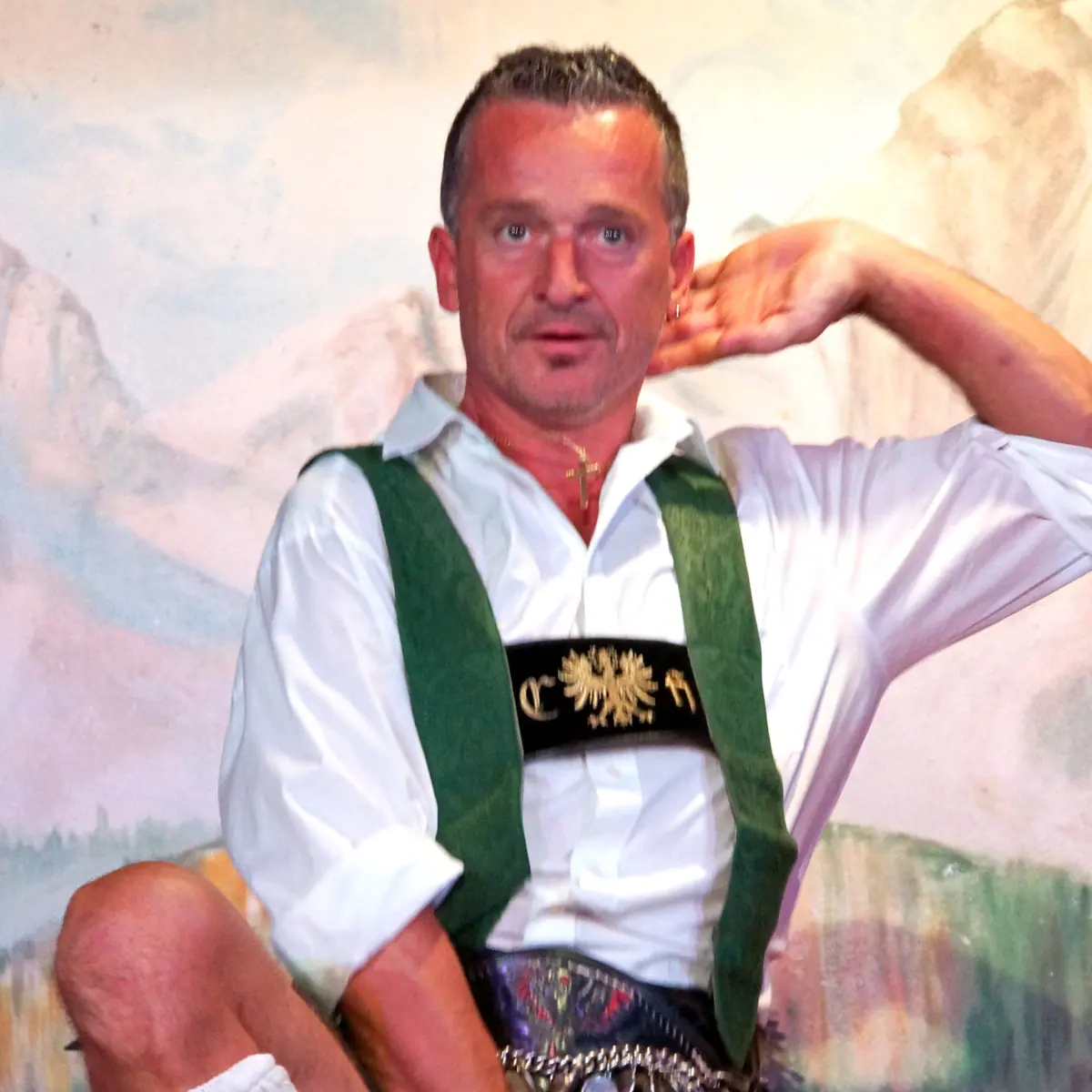
Wikipedia calls the Schuhplattler a traditional style of folk dance popular in the Eastern Alps, originating in Upper Bavaria and Tyrol, among other places. The performers stomp, clap and strike the soles of their shoes, thighs and knees with hands held flat. The word comes from Schuhe, shoes, and platt, flat. The ticket page for the Innsbruck evening translates it as shoe-slapping, which is the plainest description of what you watch.
Where it comes from
Wikipedia says one of the earliest accounts may date from 1030, when a monk at Tegernsee Abbey in Bavaria described a village dance with leaps and hand gestures. Over the centuries, it says, farmers, hunters and woodsmen practised it in the isolated towns and villages of the Bavarian and Tyrolean Alps. The immediate precursors of today's dance were the 18th-century minuet, quadrille and Française, though the early dances of the common people were free of rules.
Dances named after trades
Wikipedia says early Schuhplattlers often imitated the professions of the performers, naming the Mühlradl, the miller's dance, the Holzhacker, the woodcutter's dance, and the Glockenplattler, the bell dance. The programme the family publishes lists a miller's dance, a woodchopper's dance, a cowbell dance and a miners' dance, which suggests how the trades appear on a stage. The family names two Schuhplattler outright, called Reith im Winkel and Cross Polka.
From village floor to the royal court
Wikipedia says that in 1838 the Empress of Russia was honoured with a Schuhplattler by the residents of the bath town of Wildbad Kreuth, and that the aristocracy, fascinated by the costumes and pursuits of the common folk, began to take an interest in the dance. Many consider the real birth of the modern dance to be King Maximilian II of Bavaria's excursion through the Alps in 1858, when locals performed it for him. The dance moved from farm rooms and inns to stages in that period.
Partners and the Ländler
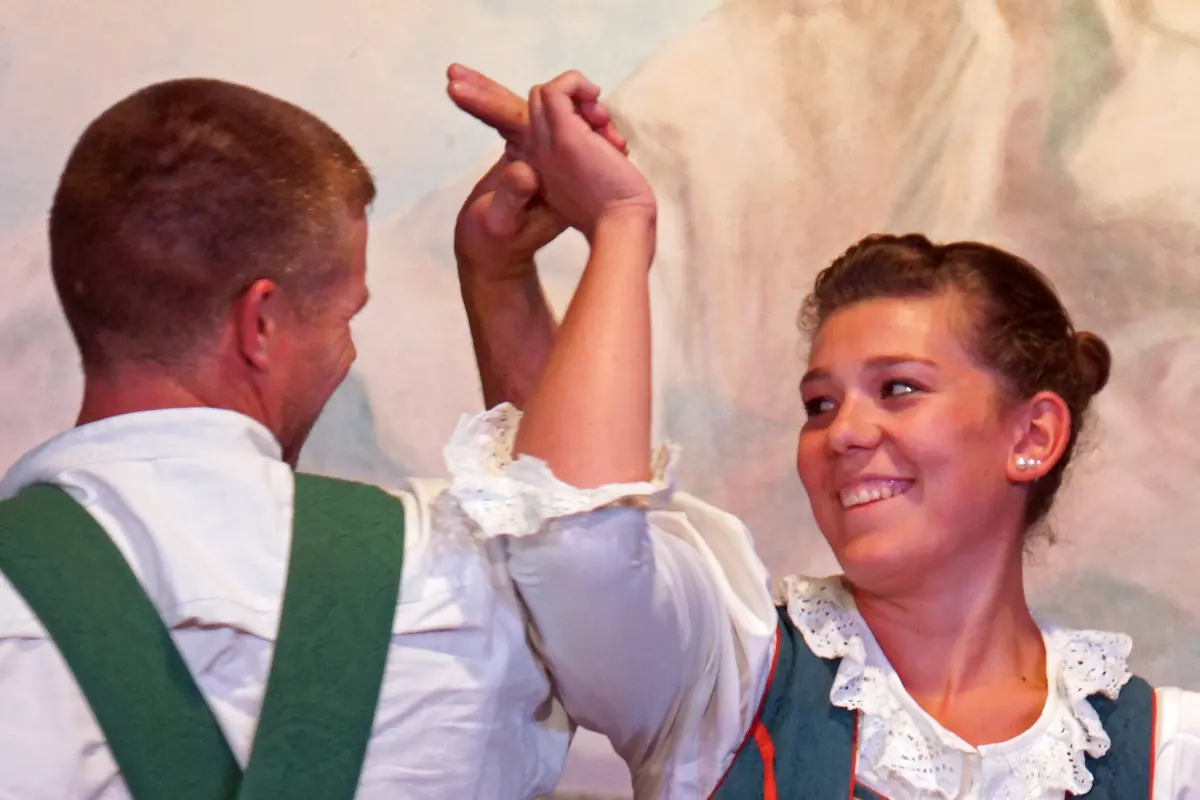
Wikipedia says the Schuhplattler was sometimes danced as a partner dance, with couples doing a Ländler and then splitting up so the women could twirl in their dirndls while the men showed off their slaps. It describes the Ländler as a partner dance that strongly features hopping and stamping, in three-quarter time. Traditionalist costume clubs, it says, still perform the Schuhplattler this way, with the women spinning across the stage.
Costume and clubs
Wikipedia says lederhosen and dirndls are expected for the Schuhplattler, and that by the late 19th century traditional costume clubs, the Trachtenvereine, were being established across Bavaria and Tyrol to preserve the customs, lore and dress of the Alps. The dance became a central part of their programmes. The photographs in this guide show costume of this kind, from the Gundolf evenings in 2015 and from a dance group in the Old Town in 2019.
Who dances it today
Wikipedia says the Schuhplattler is still largely performed by adults but has become increasingly popular with young people, who like the colourful costumes and the bouncing, leaping, kicking choreography. It adds that traditionalist costume clubs around the world still perform it as a partner dance, while newer groups, often composed entirely of Schuhplattler dancers, bring contemporary energy to the standard dances. In the Innsbruck evening, the ticket page's reviewers praise generations performing together.
What it looks like in the hall
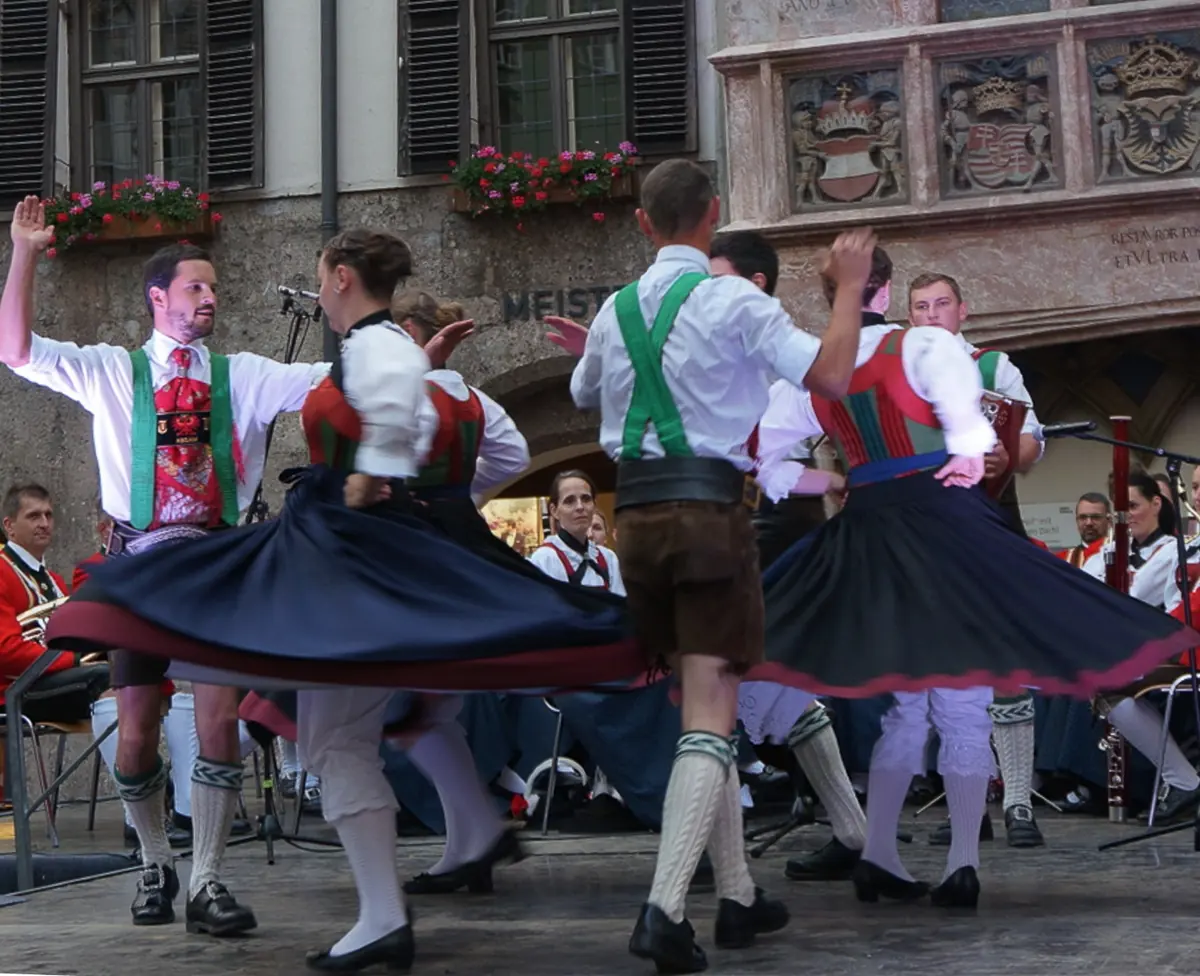
A reviewer on the ticket page loved the shoe-slapping and the generations performing together, and another praised the variety of song, dance and playing. The family says its programme brings together traditional folk music, Tyrolean dances and Schuhplattler with typical songs and yodelling. Expect the dancing to alternate with music and singing rather than fill the evening, as the published running order shows.
Frequently asked questions
What does Schuhplattler mean?
It joins Schuhe, shoes, and platt, flat. Wikipedia describes performers striking the soles of their shoes, thighs and knees with flat hands.
Is the Schuhplattler only from Tyrol?
No. Wikipedia names Upper Bavaria and Tyrol among its places of origin and calls it popular across the Eastern Alps.
Sources